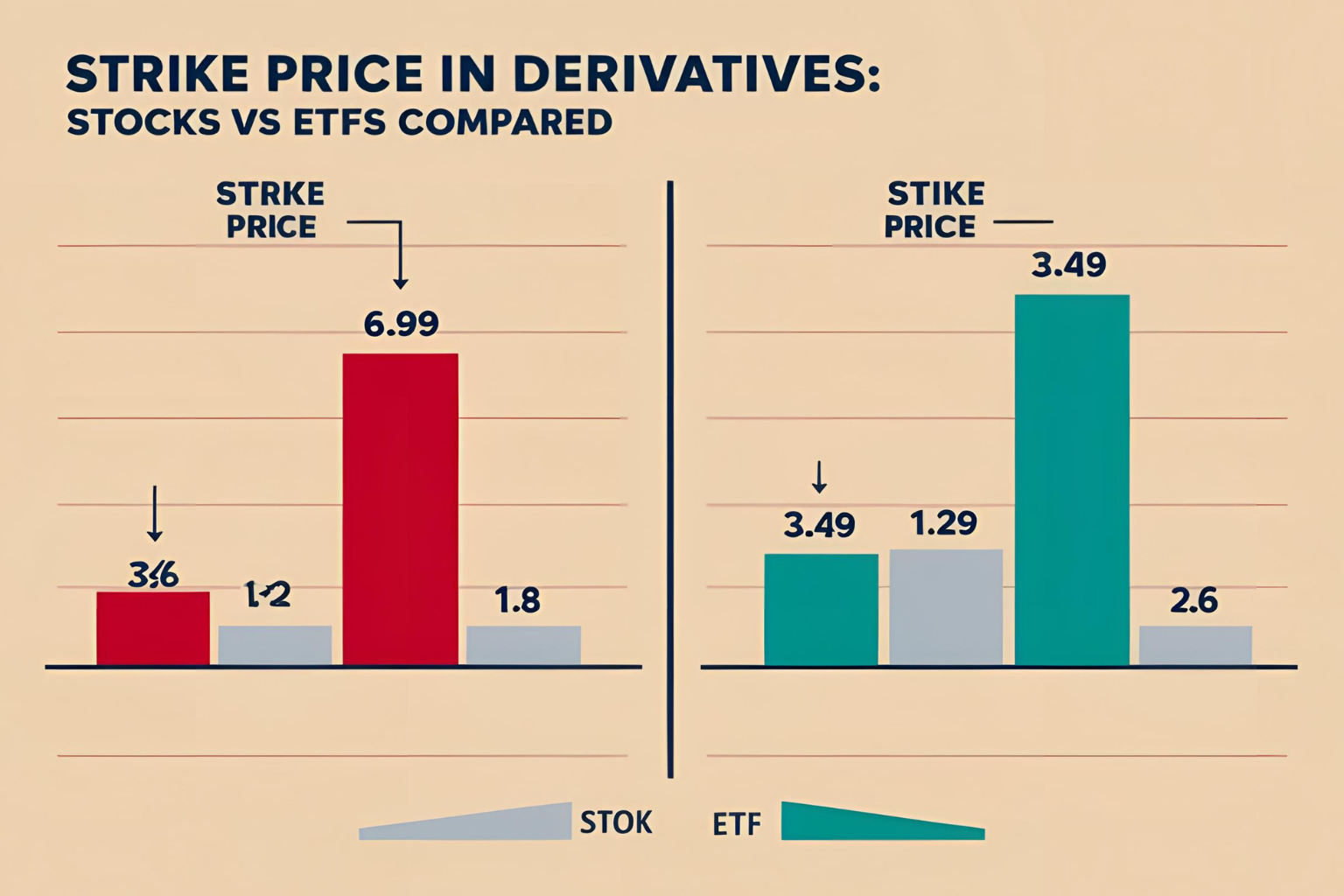
Strike Price in Derivatives: Stocks vs ETFs Compared
Introduction
Strike price plays a crucial role in derivatives trading, whether you’re trading individual stocks or broad ETFs like SPY or QQQ. While the core concept is the same, the dynamics of choosing strike prices can differ between these instruments. In this post, we compare how strike prices work in stock vs ETF options and what traders should know before selecting a strike.
What Is a Derivative Strike Price?
In derivatives like options, the strike price is the predetermined value at which an asset can be bought (call) or sold (put). It is fixed in the contract, and its relationship with the market price determines the option’s moneyness and profitability.
Strike Price in Stock Options
- Tied to the performance of a single company’s stock
- Volatility varies by the company’s sector, news, or earnings
- Strike intervals may vary (e.g., $1, $2.50, $5)
- Greater sensitivity to company-specific events
Example:
A call option on Tesla (TSLA) with a strike price of $200 gains value as the stock rises above $200.
Strike Price in ETF Options
- Tied to a basket of stocks (e.g., SPY tracks the S&P 500)
- Generally less volatile than individual stocks
- Strike prices often available in narrower intervals (e.g., $1)
- More suitable for index-based strategies and hedging
Example:
A SPY put with a strike price of $430 offers downside protection against broad market declines.
Key Differences: Stock vs ETF Strike Prices
| Factor | Stock Options | ETF Options |
|---|---|---|
| Volatility | Higher, stock-specific | Lower, basket-based |
| Strike Price Range | Wider, less uniform | Narrow, highly standardized |
| Liquidity | Can vary by stock | Typically high in major ETFs |
| Strategy Flexibility | Earnings plays, short-term | Market hedging, income plays |
| Risk | Higher company-specific risk | Diversified exposure reduces risk |
How This Affects Your Strike Price Strategy
When Trading Stocks:
- Use wider strike intervals for high-volatility names
- Factor in earnings or news catalysts when selecting strikes
- Choose strike based on historical volatility of that stock
When Trading ETFs:
- Take advantage of tight strike gaps for precision
- Focus on broader technical levels (e.g., SPY 50-day moving average)
- Use for sector or market-wide directional bets or hedging
Practical Use Case
You’re bullish on the tech sector:
- Stock Trade: Buy a call on NVDA at $800 (volatile, high risk)
- ETF Trade: Buy a call on QQQ at $420 (diversified tech exposure, moderate risk)
Strike selection in the ETF gives smoother exposure, while the stock strike has more gain potential—but also more risk.
Conclusion
Understanding the differences in strike price behavior across stocks and ETFs helps you better align your risk profile, trading strategy, and profit potential. Whether you’re targeting an individual company or a market sector, tailor your strike selection accordingly.
FAQs
Q1. Is strike price selection more complex for stocks than ETFs?
Generally, yes—stock options have more variables like earnings, news, and higher volatility.
Q2. Are ETF strike prices better for beginners?
Yes, due to more stable movement, tighter spreads, and less stock-specific risk.
Q3. Why do ETFs have narrower strike intervals?
High liquidity and broad demand make it viable for exchanges to list more precise strikes.
Q4. Can I use the same strategy for both stocks and ETFs?
Strategies like covered calls or spreads can be used on both—but risk profiles differ.
Q5. Do all ETFs offer weekly strike prices?
Not all, but major ones like SPY, QQQ, and IWM have weekly (even daily) expiries with multiple strike options.


