In-the-Money vs Out-of-the-Money: Strike Price Guide for Options Traders
Introduction
When trading options, understanding whether a contract is in-the-money (ITM) or out-of-the-money (OTM) is essential. These terms directly relate to the strike price and the current market price of the asset. In this guide, we’ll explain what ITM and OTM mean, how they impact your options strategy, and when to use each.
What Does In-the-Money (ITM) Mean?
An option is considered in-the-money when it has intrinsic value. This means the trade would be profitable if exercised immediately.
- Call Option: Market price is above the strike price
- Put Option: Market price is below the strike price
Example:
- You own a call option on AAPL with a strike price of $170.
- AAPL is trading at $180 → this call is $10 in-the-money.
What Does Out-of-the-Money (OTM) Mean?
An option is out-of-the-money when it has no intrinsic value—meaning exercising it now would result in a loss.
- Call Option: Market price is below the strike price
- Put Option: Market price is above the strike price
Example:
- You own a put option on TSLA with a strike price of $200.
- TSLA is trading at $220 → this put is $20 out-of-the-money.
Key Differences Between ITM and OTM Options
| Feature | In-the-Money (ITM) | Out-of-the-Money (OTM) |
|---|---|---|
| Has Intrinsic Value | Yes | No |
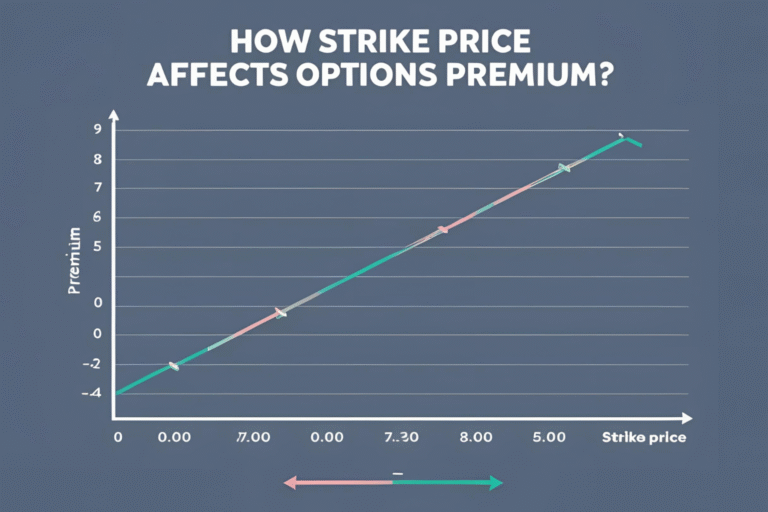
| Higher Premium Cost | Yes | Lower |
| Better Probability | Higher chance of profit | Lower chance, but higher ROI |
| Risk Level | Lower | Higher |
| Ideal For | Conservative strategies | Speculative trades |
Which One Should You Choose?
- Choose ITM if:
- You want a safer trade
- You prefer higher probability over lower cost
- You need immediate protection or are buying time decay-resistant options
- Choose OTM if:
- You’re speculating on a large move
- You want to risk a smaller amount of capital
- You’re okay with the higher probability of expiration worthless
Example Scenario
Let’s say Netflix (NFLX) is trading at $500:
| Option Type | Strike | Market Price | Status | Premium Example |
|---|---|---|---|---|
| Call | $480 | $500 | In-the-Money | $30 |
| Call | $500 | $500 | At-the-Money | $20 |
| Call | $520 | $500 | Out-of-the-Money | $10 |
Conclusion
Knowing the difference between in-the-money and out-of-the-money options gives you a major edge. The choice depends on your trading strategy, risk profile, and how much you’re willing to spend vs. the probability of profit.
FAQs
Q1. Is in-the-money better than out-of-the-money?
Not always—it depends on your goal. ITM is safer, OTM offers higher reward with higher risk.
Q2. Can I profit from OTM options?
Yes, but only if the market moves favorably before expiration.
Q3. What happens to OTM options at expiry?
They expire worthless, and you lose the premium paid.
Q4. Are ITM options always more expensive?
Yes, because they have both intrinsic and time value.
Q5. Can I sell an OTM option before expiry?
Yes, especially if implied volatility increases or the market moves toward your strike.