How to Choose the Right Strike Price for Call Options
Introduction
Selecting the right strike price for a call option can make or break your trade. Whether you’re aiming for conservative gains or taking on more risk for higher rewards, the strike price plays a crucial role in shaping your outcome. This guide will walk you through the key factors to consider when choosing a strike price for call options.
What Is a Call Option Strike Price?
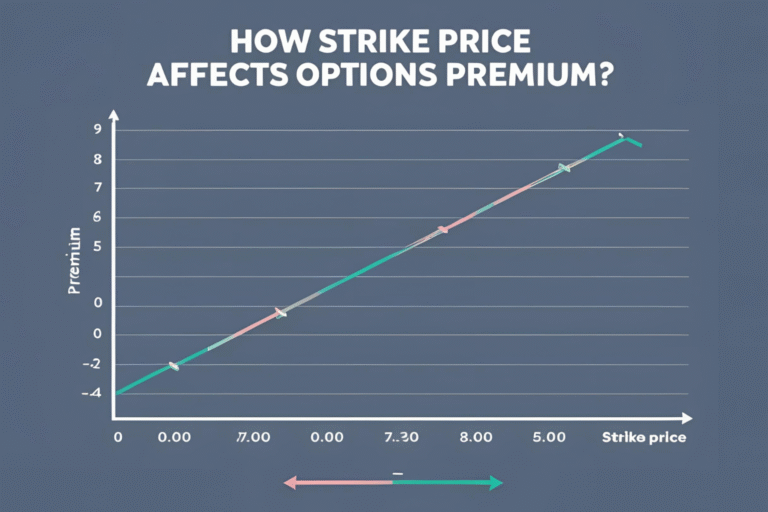
The strike price is the price at which you have the right to buy the underlying asset. In call options, a lower strike price usually means a more expensive premium but a higher probability of profit.
Three Common Strike Price Choices for Call Options
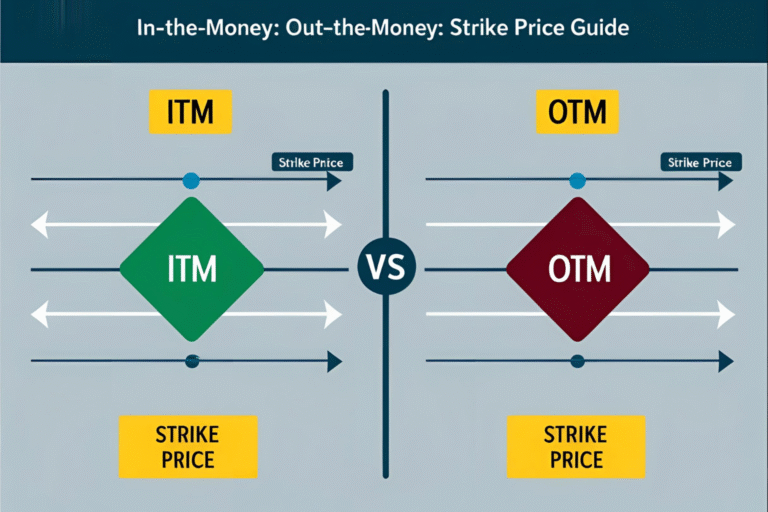
- In-the-Money (ITM)
- Strike price is below the current market price
- Higher cost, higher probability of profit
- Best for conservative or directional trades
- At-the-Money (ATM)
- Strike price is equal to current market price
- Balanced risk and reward
- Common for near-term trades or quick moves
- Out-of-the-Money (OTM)
- Strike price is above current market price
- Lower cost, higher risk
- Suitable for high-risk, high-reward setups
Key Factors to Consider
1. Your Market Outlook
- Bullish but cautious? Go ITM.
- Expecting a strong move? Try OTM.
- Expecting moderate gains? Choose ATM.
2. Time to Expiry
- Short-term options often do better with ITM or ATM.
- Long-term options (LEAPS) allow more flexibility for OTM positions.
3. Volatility Conditions
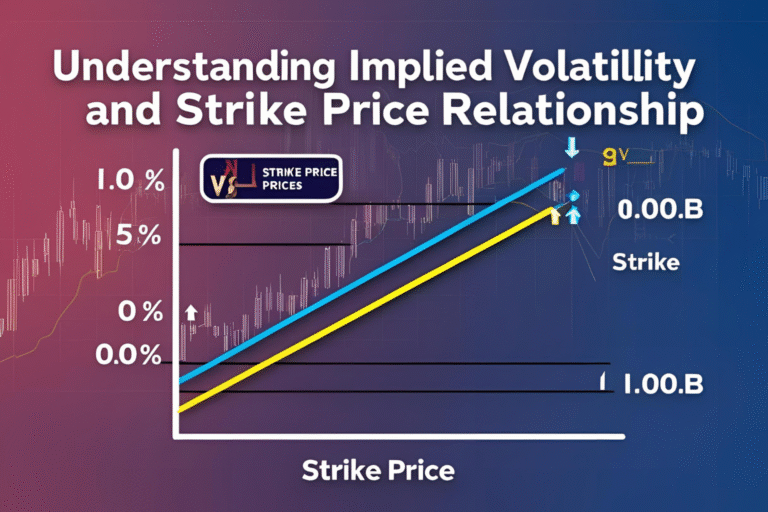
- High implied volatility increases option premiums.
- In volatile markets, closer-to-the-money strikes are safer.
4. Risk Tolerance
- ITM: Safer, more capital required.
- OTM: Cheaper, riskier, needs strong price move.
- ATM: Balanced, good for neutral to moderately bullish setups.
Real Example
Let’s say Amazon (AMZN) is trading at $140:
| Strike Price | Option Type | Premium (Example) | Risk Level | Reward Potential |
|---|---|---|---|---|
| $130 | ITM | $15 | Low | Moderate |
| $140 | ATM | $9 | Medium | Good |
| $150 | OTM | $4 | High | High |
Best Practices
- Start with ATM or slightly ITM for higher win rates.
- Use OTM when aiming for a specific price target and low capital risk.
- Always compare break-even points (strike price + premium).
FAQs
Q1. What’s the safest strike price for a call option?
In-the-money strikes are generally safer but cost more.
Q2. Should I always buy ATM call options?
ATM is common for balanced setups, but your decision should depend on outlook and risk.
Q3. Can I change my strike price later?
No, once you buy an option, the strike price is fixed.
Q4. What if my call option is out-of-the-money at expiry?
It expires worthless, and you lose the premium paid.
Q5. How do I find the best strike prices on a platform?
Use the options chain. Look for open interest, delta values, and premium costs.